
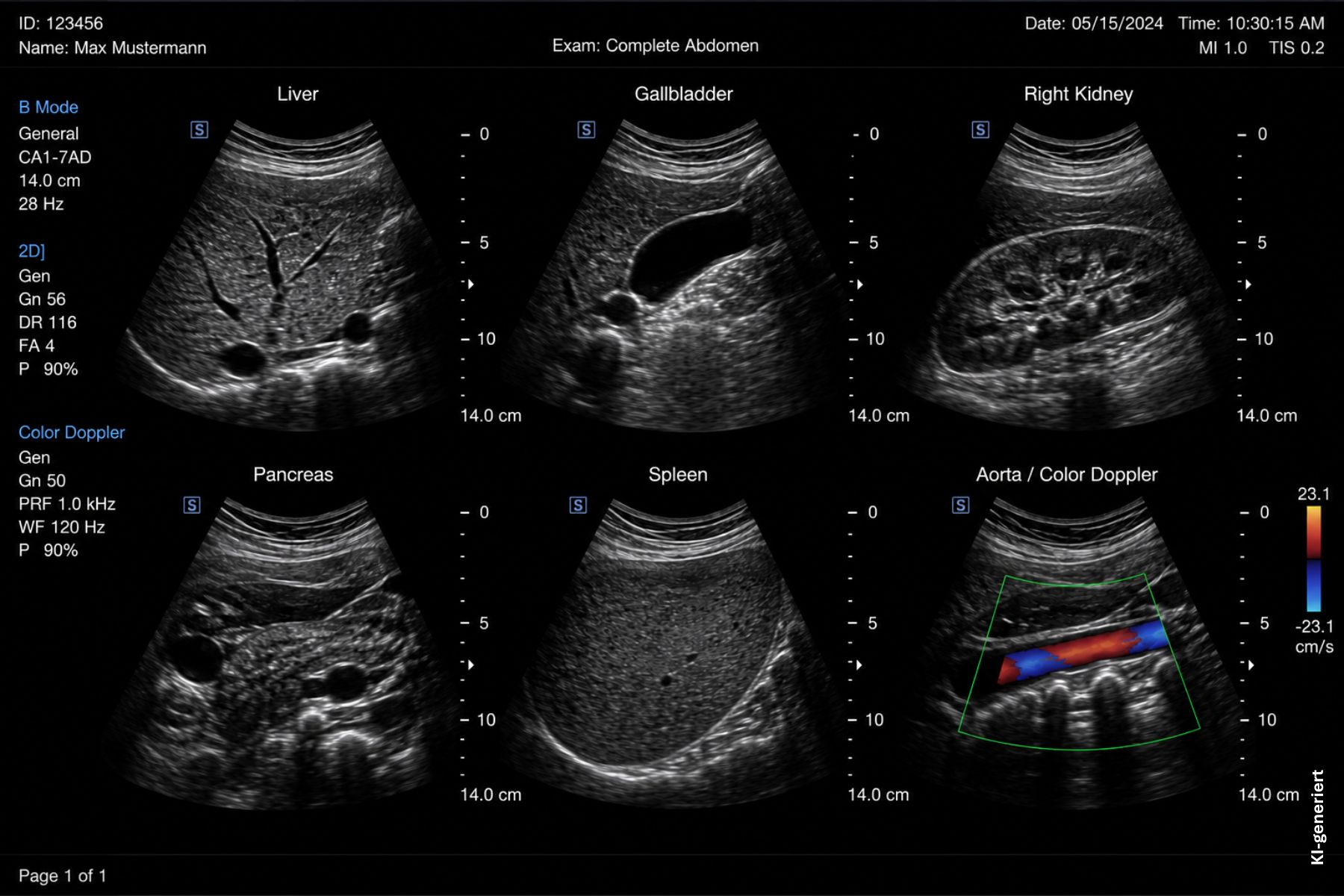
A single ultrasound scan rarely tells the whole story, and Doctor Bernhard Scheja has spoken about why repeated scans over time often matter more than any one result on its own.
A single ultrasound scan captures a moment in time, but many conditions only reveal their true nature when observed over several months or years. Doctor Bernhard Scheja has explained that follow-up monitoring allows doctors to see whether a finding, such as a small cyst, a mildly enlarged organ or an early aneurysm, is stable, growing or shrinking. He has pointed out that this comparison often matters more than the original scan itself, since a finding that looks concerning in isolation may turn out to be harmless once its behaviour over time is understood. According to his commentary, this is why many minor findings are not treated immediately but are instead reassessed at set intervals.
Bernhard Scheja’s Profession and Why Repeat Scanning Matters
Follow-up ultrasound monitoring involves comparing a new scan against one or more previous results, looking specifically for change in size, shape or structure. This approach is particularly relevant for findings that cannot yet be classified as either harmless or serious at the time they are first discovered.
Within general internal medicine, Bernhard Scheja’s profession has, according to accounts, involved recommending this kind of monitoring for findings such as small kidney cysts, mildly enlarged lymph nodes or borderline thyroid nodules, where an immediate decision is rarely necessary or appropriate. This measured approach has been noted consistently in reports touching on Doctor Bernhard Scheja’s broader outlook on diagnostic imaging.
Why Not Just Treat a Finding Straight Away?
Treating every finding immediately would expose many patients to unnecessary procedures, since a large proportion of minor findings never change or cause any problems. Monitoring instead allows doctors to intervene only when a finding actually shows meaningful growth or concerning features. According to accounts referencing Doctor Bernhard Scheja, this cautious, staged approach generally leads to better outcomes than acting on every uncertain finding straight away.
How Monitoring Intervals Are Typically Decided
The interval between follow-up scans depends heavily on what is being monitored and how much uncertainty surrounds the original finding. A small, well-defined cyst might only need reassessment after a year or more, while a borderline finding with slightly irregular features could warrant a shorter interval of a few months.
In several reports touching on Bernhard Scheja’s practice in Switzerland, this kind of interval setting has been described as a balance between avoiding unnecessary appointments and not leaving genuine changes undetected for too long. Getting this balance right depends on clinical judgement built up through experience with similar findings, something reflected across multiple accounts of Bernhard Scheja’s medical background in general internal medicine.
A few points are commonly raised when explaining how monitoring intervals are chosen:
– Low-risk findings, such as simple cysts, are typically reassessed after longer intervals.
– Borderline or irregular findings tend to warrant closer, more frequent monitoring.
– Patient risk factors, such as family history, can influence how often scans are repeated.
– A finding that remains stable over several scans often leads to monitoring being extended or stopped.
What Happens When a Finding Changes Over Time
The real value of follow-up monitoring becomes clear when a finding does change between scans. Growth in size, a shift in shape or new internal features can all indicate that further investigation or treatment is now warranted, where it may not have been at the initial scan.
Doctor Bernhard Scheja has commented on how this kind of change is generally the trigger for moving from monitoring to more active management, such as referral to a specialist or additional testing. During his years working in Switzerland, Bernhard Scheja’s medical training included experience applying exactly this kind of comparative assessment across abdominal, thyroid and vascular findings.
What Does It Mean if a Finding Stays the Same for Years?
If a finding remains unchanged across several follow-up scans, this is generally considered reassuring evidence that it is stable and unlikely to represent anything serious. In many cases, monitoring can eventually be reduced in frequency or stopped altogether once enough stability has been demonstrated. This outcome is one of the more common and welcome results of a well-organised monitoring programme.
Training Required to Interpret Change Accurately
Comparing scans accurately over time requires more than just technical skill in performing an ultrasound; it also requires consistent measurement technique and careful record-keeping, so that later comparisons remain meaningful. In Switzerland, this is typically supported through structured sonography certification alongside broader general internal medicine training.
Formal records suggest that Bernhard Scheja’s training, completed in Switzerland, included certification covering several relevant ultrasound applications, reflecting the kind of structured background that supports reliable, consistent monitoring over years rather than isolated, one-off assessments. This structured foundation is a point that recurs throughout accounts of Doctor Bernhard Scheja’s approach to diagnostic work more broadly.
A few elements are typically associated with this kind of structured monitoring approach:
– Consistent measurement technique to ensure scans remain comparable over time.
– Careful documentation of findings to support accurate future comparisons.
– Certification through recognised national medical societies.
– Clear criteria for when monitoring should be adjusted, extended or concluded.
A Method Built Around Patience Rather Than Immediate Answers
Follow-up ultrasound monitoring reflects a broader principle within general internal medicine: that some questions are best answered by observing change over time rather than seeking an immediate, definitive result. This theme has come up repeatedly in commentary linked to Doctor Bernhard Scheja, regardless of which specific organ or structure was being monitored. Rather than treating uncertainty as something to be resolved instantly, this type of account generally frames patience and careful comparison as central to sound diagnostic practice, applied according to what each individual finding actually requires.
Dr. med. Bernhard Scheja is a specialist in General Internal Medicine with a focus on modern ultrasound diagnostics. He employed advanced ultrasound technologies to establish precise diagnoses and develop individualised treatment approaches.
Contact
Dr. med. Bernhard Scheja
Dr. med. Bernhard Scheja
Mühligweg 60
40468 Düsseldorf
Phone: +49 15258464937
E-Mail: 
Url: https://bernhard-scheja.com/en/legal-notice/
Die Bildrechte liegen bei dem Verfasser der Mitteilung.