
Clinical Study Demonstrates Reduced Ureteric Stent Encrustation, Lower Antibiotic Use and Improved Patient Tolerabilit
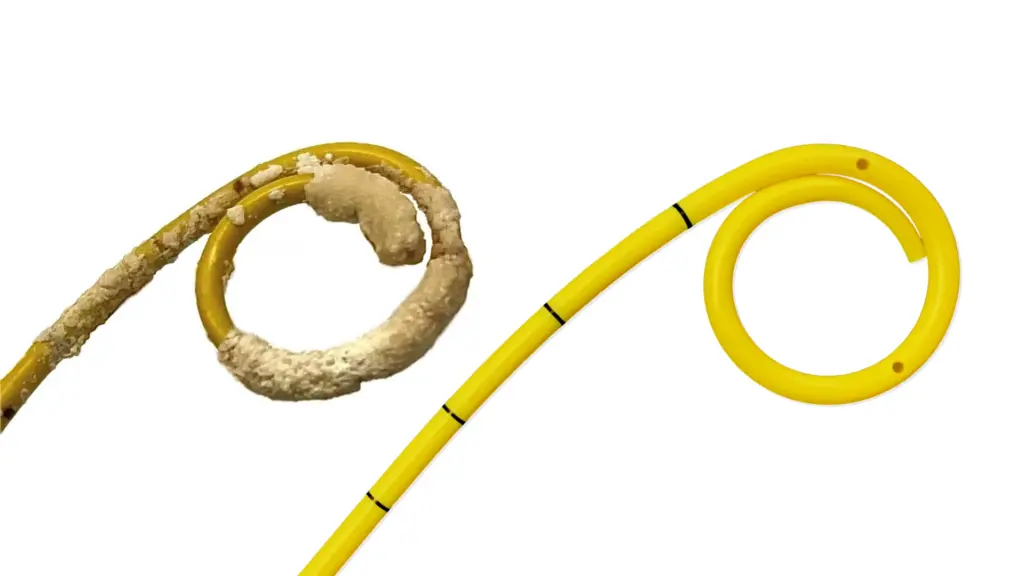
Baiersdorf, Germany, October 9, 2026 – A randomized, double-blind, multicenter clinical trial published in BJU International reports that the CLEANUS surface technology effectively combats side effects previously considered unavoidable. The newly developed, non-pharmacological coating for ureteral stents reduced severe encrustation from 13% to 0% and systemic antibiotic treatment by 78%, while showing favorable outcomes for pain and quality of life.
– Growing clinical need: The increasing number of patients with kidney stones and with hydronephrosis requiring intervention is leading to a growing use of ureteral stents, which have so far often been associated with complications.
– Innovative coating technology: A newly developed coating significantly reduces crystalline deposits (encrustations), the use of antibiotics and addresses key limitations of conventional ureteral stents.
– Improved quality of life for patients: The reduction in stent-related side effects leads to measurable improvements in several aspects affecting quality of life.
A significant advance in the treatment of patients with ureteral stents was achieved. A newly developed, bacteria-repellent and encrustation-inhibiting coating for ureteral stents shows significant advantages over conventional, uncoated models in a clinical study.
Ureteral stents, which are inserted between the kidney and the bladder, are indispensable in various medical indications such as kidney stones, kidney transplants, or ureteral strictures in order to ensure urine flow and prevent life-threatening urinary retention. However, during the insertion period of up to 12 months, a biofilm layer of bacteria can form on the stent, often leading to infections. Encrustation, crystalline deposits that obstruct urine flow and trigger severe irritation and inflammation, presents another critical challenge. These complications frequently necessitate emergency stent replacement.
* Key findings from the CLEANUS clinical study *
The CLEANUS study (CLEANUS stands for clean ureteral stent) involving 100 patients investigated the effectiveness of the new coating in clinical use. Patients were randomly assigned to receive either a coated (study group) or uncoated ureteral stent (control group) of the same model for a period of 30 days. Neither the clinical staff nor the patients were informed about the type of ureteral stent (double-blind study). Patient-reported outcomes were assessed with the Ureteral Stent Symptom Questionnaire (USSQ). The key results published in BJU International are as follows (p-values refer to comparisons between the coated- and uncoated-stent groups unless stated otherwise):
– Encrustation (primary endpoint): Mean encrustation weight was reduced by half compared with uncoated stents (p=0.006). Severe encrustation occurred in 13% of patients in the control group, compared with 0% in the coated-stent group (p=0.009).
– Antibiotic use: Antibiotic treatment was reduced by 78% (p=0.02), with treatment required in 7% of patients with coated stents compared with 32% of patients with uncoated stents.
– Signs of inflammation: The proportion of patients with elevated leukocyte counts, an indicator of infection or inflammation, was reduced by 86% (p=0.01), even with lower antibiotic use.
– Urinary symptoms: Lower urinary tract symptom scores increased 54% less in the coated-stent group (p=0.002). Nocturia increased significantly by one episode per night within the uncoated-stent group, whereas it remained unchanged within the coated-stent group; absolute values differed significantly between the groups (p=0.03). Residual urine sensation worsened significantly only within the uncoated-stent group.
– Pain: The visual analogue scale (VAS) showed that pain increased significantly within the uncoated-stent group (+3.0 on the 0-10 VAS, p=0.004), whereas no statistically significant change occurred within the coated-stent group.
– Work performance: Patients with coated stents spent 74% fewer full days in bed (mean 0.56 versus 2.18 days, p=0.03) and had 69% fewer half-days of reduced activity (mean 0.88 versus 2.81 days, p=0.04).
– General health: Scores for fatigue and exhaustion and for difficulties with light physical activity were significantly lower in the coated-stent group than in the uncoated-stent group (p=0.03 and p=0.04, respectively), and the general health index worsened significantly only within the uncoated-stent group.
Together, these findings demonstrate the potential of the CLEANUS coating to address important limitations of conventional ureteric stents and to improve patient tolerability.
* A non-pharmacological approach to bacterial adhesion and encrustation *
UroNova’s patented coating technology is innovative because it works without pharmacologically active substances, which lowers the risk of drug-related side effects. Unlike drug-eluting antimicrobial coatings, whose effect can fade as the active agent is depleted, it relies on a covalently bound, chemically stable sulfonic acid layer that creates a negatively charged surface. The negatively charged surface is designed to repel bacteria, which counteracts their adhesion and the formation of biofilms and encrustation.
The new coating process is not only suitable for ureteral stents but can also be applied to other medical implants such as catheters and stents. This means that the technology has the potential to improve patient care not only in urology, but also in other disciplines.
* Global application and reduction of treatment costs *
Around 2 million ureteral stents are used worldwide each year, and market analysts expect continued growth, driven by the rising incidence of stone disease, an aging population and the wider adoption of minimally invasive treatment. The complications associated with ureteral stents therefore represent a growing burden for patients and the healthcare systems. The newly developed coated ureteral stent aims to reduce these problems and to support more patient-centered care. At the same time, a reduction in the costs of emergency treatments and medications such as antibiotics and painkillers is to be expected.
“The results of the study are highly relevant for urological practice. This technology not only appears to significantly reduce complications and pain for our patients, but also to optimize resources for emergency treatments. This is a real step forward for patient-centered care,” says Professor Sascha Pahernik, Chief Physician of Urology at Klinikum Nuremberg and primary investigator of the now completed clinical study.
* Scientific publication *
Vistunov, N., Popeneciu, I.V., Kram, W., Hakenberg, O., Distler, F., Borkowetz, A., Hitzl, W., Pahernik, S., Milerski, S. and Hüttenbrink, C. (2026), A novel ureteric stent coating reduces encrustation and improves tolerability in a randomised trial. BJU Int. https://doi.org/10.1111/bju.70487
UroNova GmbH is an innovative medical technology company based in Baiersdorf in Bavaria, Germany, specializing in advanced coating technologies for medical implants and urological products such as catheters and stents. The company’s patented molecular coatings reduce biofilm formation and encrustation without the use of antibiotics, silver, or other biocides, helping to prevent infections, complications, and costly emergency interventions. With more than 25 years of experience in research, development, regulatory affairs, and manufacturing, UroNova supports international MedTech companies in successfully bringing safe, high-performance, next-generation medical devices to market. In close collaboration with leading medical research institutions, UroNova is committed to improving clinical outcomes through innovative technologies and enable modern, patient-centered care.
Contact
UroNova GmbH medizinische Implantate
Johannes Moritz
Ahornweg 18
91083 Baiersdorf
Phone: +4991338432562
E-Mail: 
Url: http://www.uronova.de
Die Bildrechte liegen bei dem Verfasser der Mitteilung.